Christmas and New Year are coming. You might wonder what to buy for your Thai friends, colleagues, and family. Here are the tips with the 5 common gift ideas for New Year that Thai people enjoy.





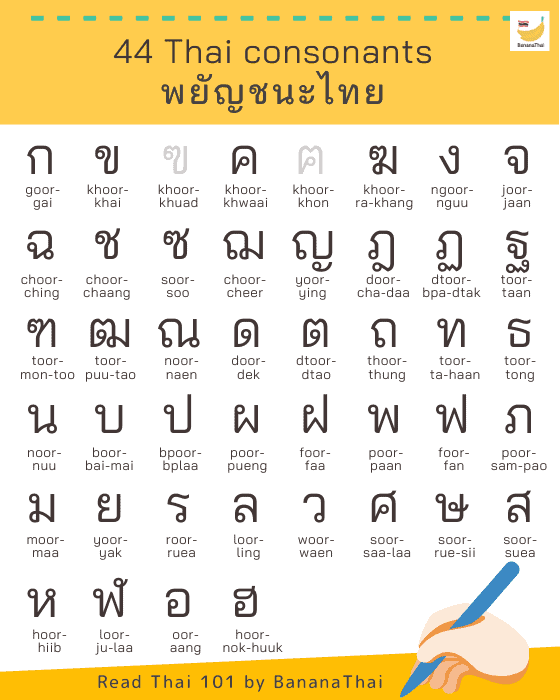
In the Thai language, there are a total of 44 Thai consonants. However, there are 2 consonants that are obsolete or no longer used, which are ฃ (khoor-khuad) and ฅ (khoor-khon). You cannot even find these two on a Thai keyboard.
💡 Tip: Round Heads
Many of them have a head. You normally start writing from head to tail. However, there are 2 consonants without a head which are ก and ธ (start writing from left to right).
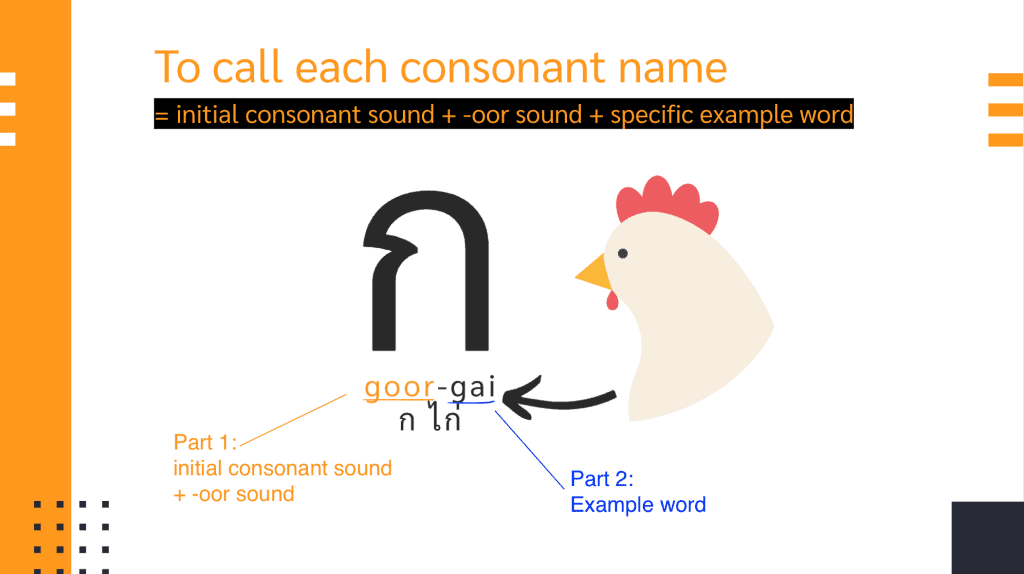
To call each Thai consonant, there are 2 parts in a consonant name:
1. Initial consonant sound with “-oor” sound
2. Example word that represents the consonant
For example
This ก consonant letter is called goor-gai
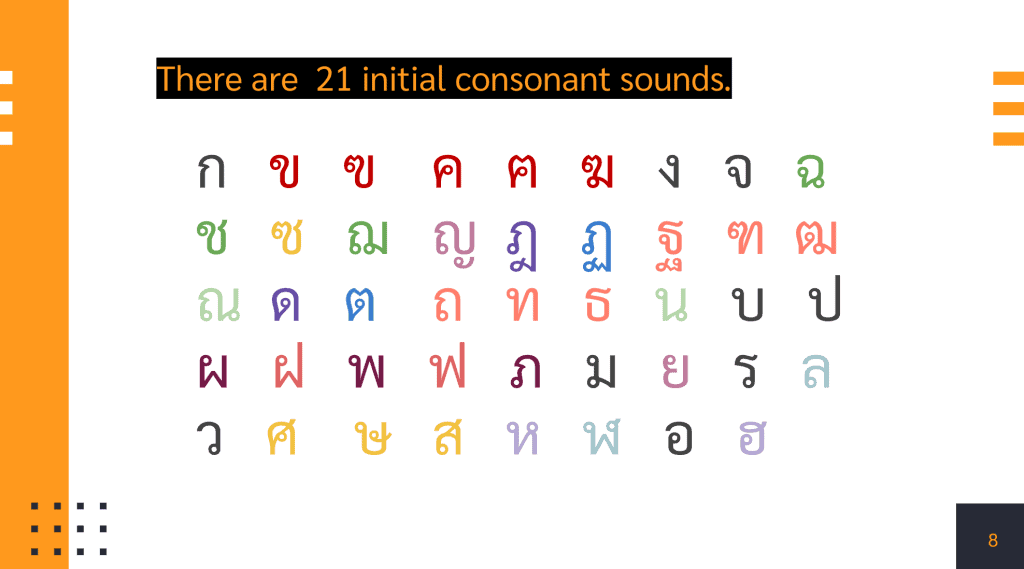
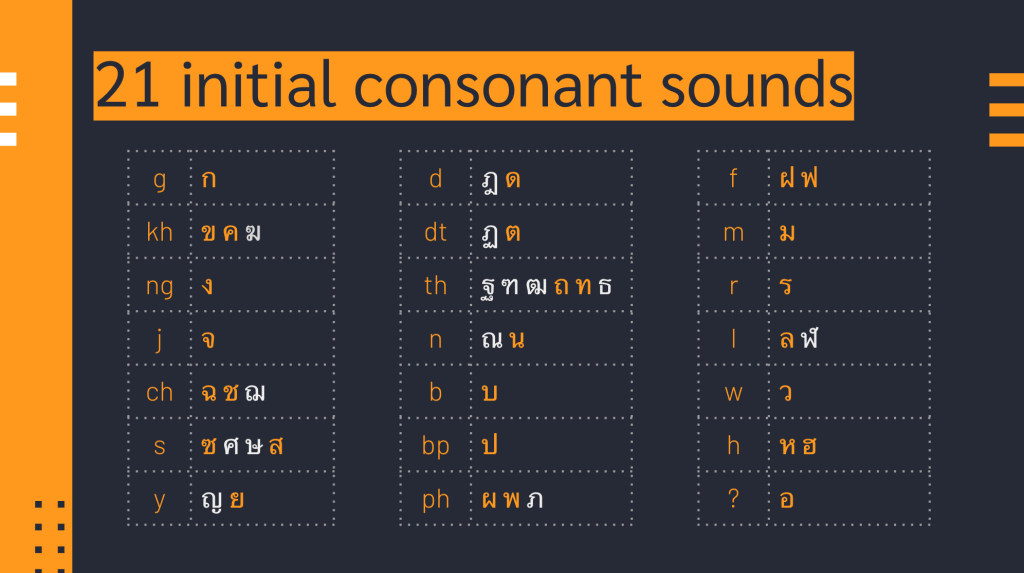
Even though there are 44 Thai consonants in the Thai alphabet, there are only 21 consonant sounds. It means that some consonants share the same initial consonant sound!
As you can see from the photo below, consonants are grouped by initial consonant sounds with a special colour.
For example:
Another way to take a look at Thai consonants is to group them by initial consonant sounds in English. The consonants that are in orange are the on that are more commonly used than the ones in white.
 Question:
In the photo below, the three consonants ส (soor-seua), ษ (soor rue-sii), and ศ (soor-saa-laa) share the same “-s” initial consonant sound.
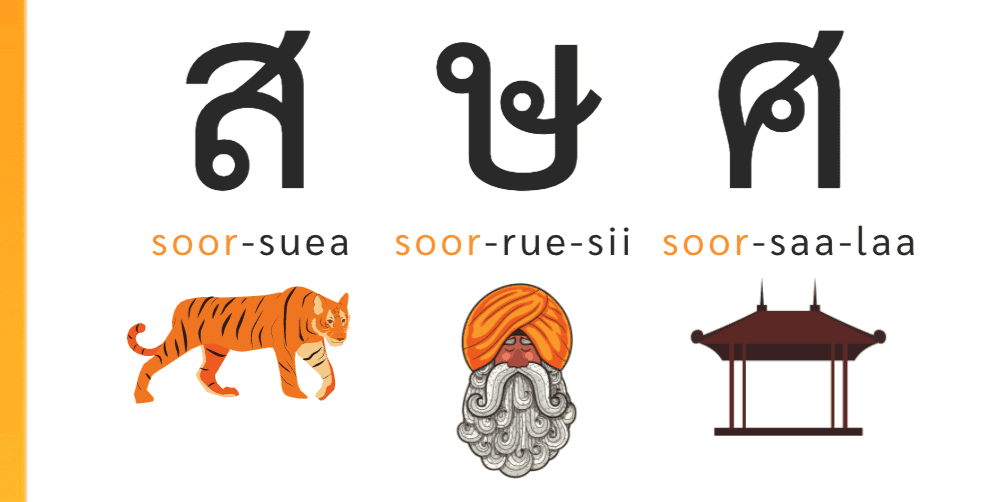
If you say ‘soor’, it can be ส (soor-seua), ษ (soor rue-sii), or ศ (soor-saa-laa). That’s why there is an example word representing each consonant.
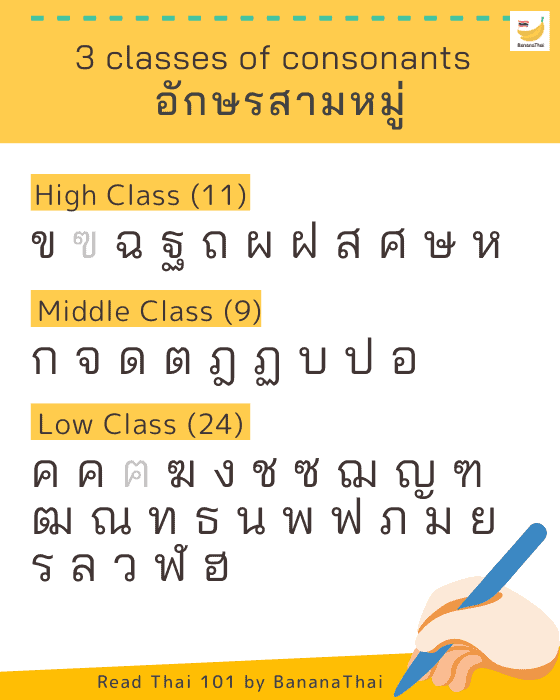
One important thing that you have to learn from the beginning is that the 44 Thai consonants are classified into 3 classes, which are:

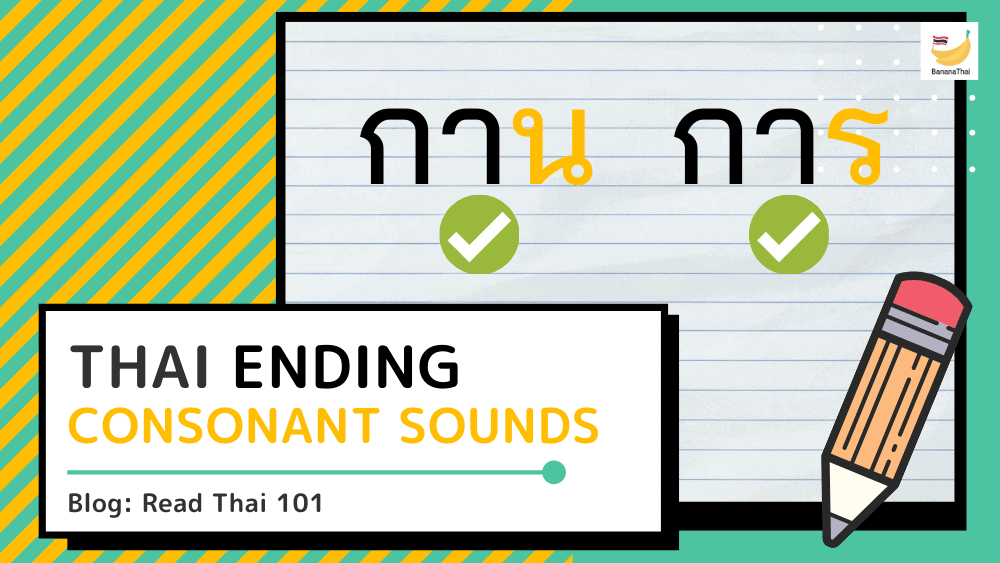
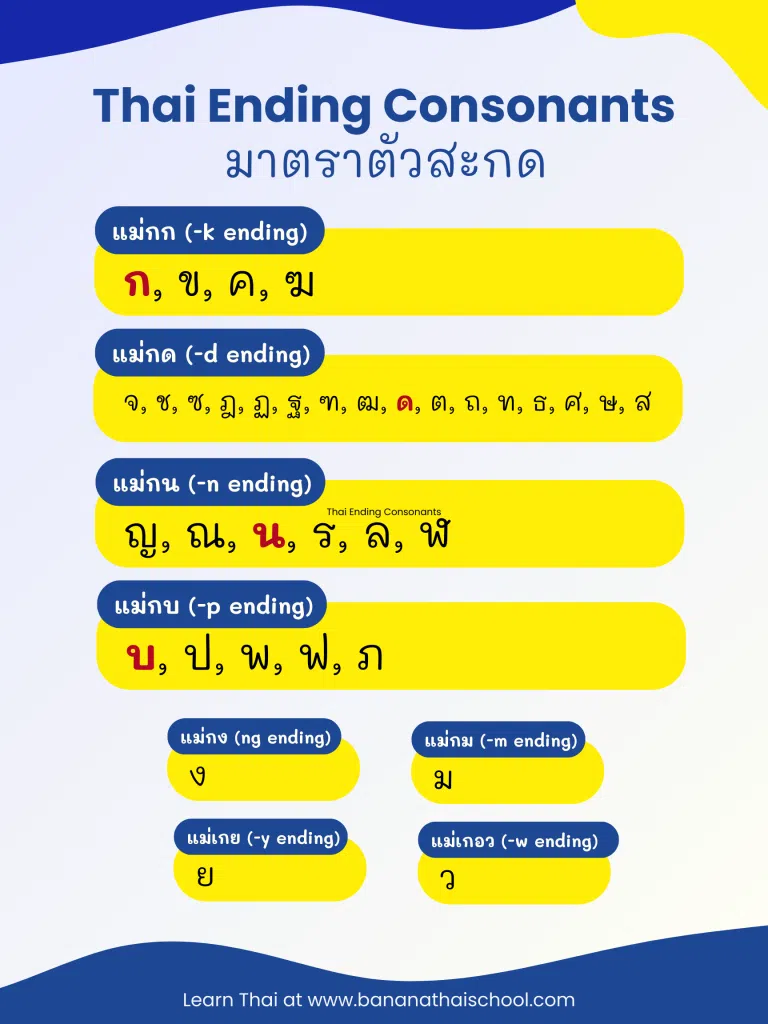
In Thai, there are only 8 ending consonant sounds. It means there are many consonants that share the same ending consonant sounds. Only ห, อ, and ฮ cannot be ending consonants.
Even though there are 44 Thai consonants in the Thai alphabet, there are only 8 ending consonant sounds. It means there are many consonants that share the same ending consonant sounds, which are:
The 8 consonants representing 8 different ending consonant sounds have direct ending sounds, while the other consonants have nondirect ending consonant sounds. Let’s take a look at the pictures below:
As mentioned above, the ending consonants also define the tones of a syllable. Besides, it also helps with pronouncing Thai words.
We adopted many words from other languages (loan words), and we usually write them according to the original words, however, we pronounce them in the Thai way.
For example:
The name of a shopping mall in Bangkok, Central World. We write it “เซ็นทรัลเวิล์ด” but we pronounce it “cen-tân wuen”.
Tral = ทรัล (pronounced ทรัน / tran) because in Thai, ล ending consonant has “น” (-n) ending sound.
💡 Many of Thai consonants don’t have the same initial and ending sounds. When learning a consonant, you need to remember both initial sound and ending sound.
Learn about the ending consonant sounds <<Read Blog>>





 If you say ‘soor’, it can be ส (